
Guides
Boost Your Art Sales with Custom Bookmark Printing in Newcastle-under-Lyme
Create bookmarks that not only look amazing but actually sell.


Ever spent hours perfecting a draft drawing only to realise it means nothing until it’s printed correctly?
In the world of design and construction, a digital file alone is not enough. Teams, contractors, and clients rely on clear, scaled outputs they can review, approve, and build from.
A plot in CAD refers to the process of printing or outputting a digital drawing file into a physical or digital format that maintains precise scale, layout, and formatting.
In simple terms, plotting converts your on-screen design into a shareable document, such as a PDF or large-format printed drawing.

Unlike a basic print command in standard office software, CAD plotting is highly controlled and precise. It involves setting drawing scales, line weights, paper sizes, title blocks, and plot styles.
The goal is to ensure that what appears on paper or in a PDF matches the exact measurements and visual hierarchy defined in the design file.
Plots can be produced on large-format plotters for construction drawings, or exported as scaled PDFs for digital review. Whether printed or shared electronically, a plot represents the official, readable version of the design.
Plots are required because construction and manufacturing depend on precision. A contractor cannot build from a raw CAD file. They need a scaled, formatted drawing that clearly communicates dimensions, materials, and technical notes.
First, plots preserve scale. In architecture and engineering, even a slight scaling error can lead to significant construction issues. Plot settings ensure that a 1:100 drawing actually measures correctly when printed.
Second, plots standardise communication. Every stakeholder, from structural engineers to site managers, reads from the same formatted layout. Title blocks, revision clouds, and annotations appear exactly as intended.
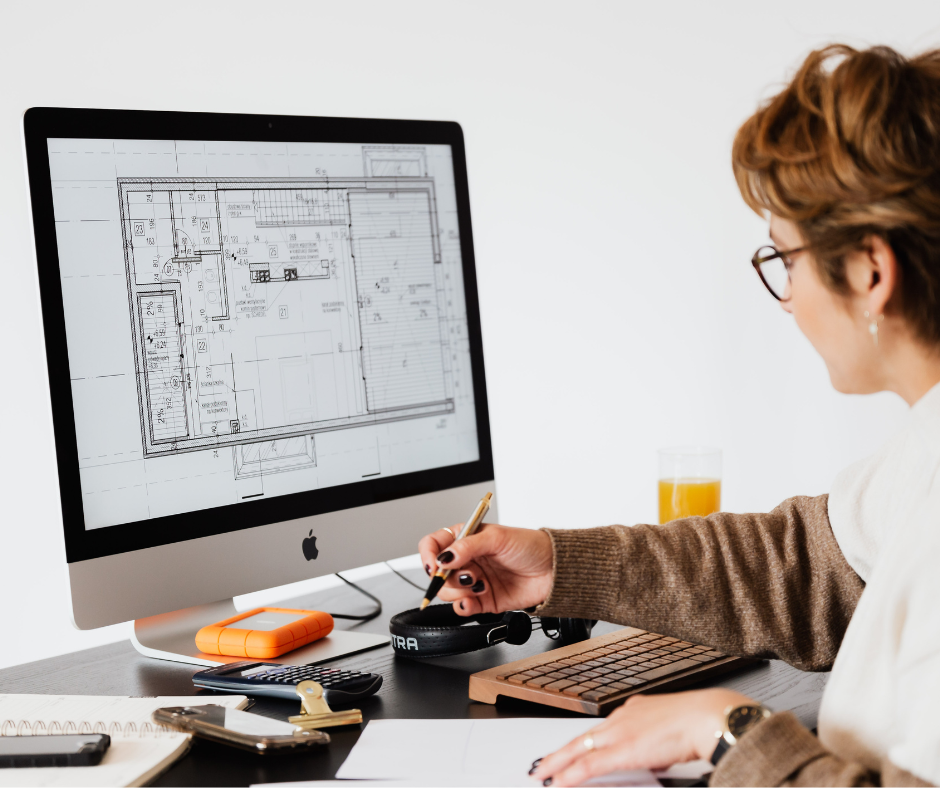
Third, plots support approvals and compliance. Many local authorities require plotted drawings for planning applications, permits, and inspections. These submissions must follow strict formatting and documentation standards.
Finally, plots create a record. Once issued for construction, a plotted drawing becomes part of the project documentation. It tracks revisions, approvals, and changes over time.
Understanding the plotting process helps clarify why it is required.
When preparing a CAD plot, designers typically follow these steps:
Each of these settings directly affects how the final drawing will be interpreted on-site. Incorrect line weights can hide structural details.
Wrong scaling can distort measurements. Poor layout setup can cut off critical notes.
This level of control is why plotting in CAD is not optional. It is a technical requirement for delivering professional drawings.
In architecture, floor plans, elevations, and sections are plotted at defined scales for client presentations and contractor use. These large-format sheets guide the physical construction of buildings.

In civil engineering, site layout drawings and utility plans are plotted to coordinate excavation, drainage, and road placement.
Accurate plots prevent costly mistakes during groundwork.
In mechanical design, assembly drawings are plotted to show how components fit together. Manufacturers rely on these plotted drawings to fabricate parts correctly.
Across industries, the plot acts as the bridge between digital design and physical execution.
Plots in CAD drawings are not just printed versions of digital files. They are controlled, scaled, and formatted outputs that communicate technical information accurately.
Without proper plotting, even the most detailed CAD model cannot be reliably used for construction, manufacturing, or approval processes.

By understanding what plots are and why they are required, design professionals can reduce errors, improve collaboration, and ensure that their drawings translate seamlessly from screen to site.
We provide various plotter paper rolls suitable for architectural, engineering, and construction drawings, ensuring sharp lines, accurate scaling, and professional presentation every time.
Whether you need A1, A0, or custom large-format sizes, our materials are designed to meet industry standards.
In addition, we offer a reliable large-format printing service for CAD plots. From one-off urgent prints to ongoing project batches, our service ensures your drawings are produced accurately, on time, and ready for submission or on-site use.
Create bookmarks that not only look amazing but actually sell.

Quality printing for businesses in Stoke-on-Trent and Newcastle-under-Lyme.

3D printing is no longer an experimental tool, it is a practical solution.
