
Guides
Boost Your Art Sales with Custom Bookmark Printing in Newcastle-under-Lyme
Create bookmarks that not only look amazing but actually sell.


Printmaking industries use Giclee techniques to generate stunning prints for a vast range of artists.
The term giclée originates from the French word gicler, meaning “to squirt or spray,” which perfectly describes the printing process behind it.
A digital image is first processed using specialised software before being sent to a large-format inkjet printer.
The printer then precisely sprays microscopic droplets of ink onto the chosen paper or media, creating exceptional colour depth and detail.
Within the fine art world, giclée is regarded as a mark of prestige, referring to prints produced to the highest standards of quality.
Many artists choose giclée printing when presenting or selling reproductions of their work, especially in galleries or professional exhibitions, because of its accuracy, richness, and longevity.
There are many different types of giclée paper available, each offering its own qualities. Fine art papers typically have a heavier weight, giving them more thickness and texture, which helps enhance the visual impact of the artwork.
Made from natural fibres such as cotton, these papers are free from artificial chemicals like bleach and optical whiteners.
This ensures the prints remain stable and resist yellowing or fading over time.
Canvas and cotton-based giclée papers are especially popular among artists for their rich vibrancy and acid-free properties, making them ideal for professional-quality art reproductions.

Also known as archival prints, giclée reproductions rely heavily on the quality of the paper used, a crucial consideration for artists. Large-format printers use pigment-based inks with advanced 12-colour ink sets, producing exceptionally detailed and vibrant giclée prints.
When stored correctly, pigment-ink prints offer outstanding longevity, remaining lightfast for 100 years or more.
The surface finish of the paper also plays a vital role in the final look of the artwork. For a more traditional and tactile feel, heavily textured matte papers typically weighing over 300gsm create a museum-grade finish. Alternatively, smooth matte papers with minimal texture provide a refined, clean appearance.
Thanks to their enhanced colour density and definition, textured papers are often favoured in the fine art world.
With a wide range of characteristics available, from matte to glossy, smooth to warm-toned, fine art papers offer the perfect combination of texture, weight, and finish to deliver the exact visual impact an artist desires.
There are several ways to protect giclée prints once they’re ready to be framed.
Some frames are even designed with specialised UV-filtering glass to help prevent fading over time.

It is also a benefit to frame a fine art print without mounting, as this may have acidic additives when using adhesives or tapes to attach the mount to the print.
As well as printing, scanning fine art pieces involves advanced scanning equipment to capture colours in the exact shade.
Large flatbed scanners match colours exactly to the original artwork.
By using software to adapt the scan into prints, the scan of the reprint will be of the highest quality.
Many printing companies offer specialised printing, including our fine art printing services.
Create bookmarks that not only look amazing but actually sell.
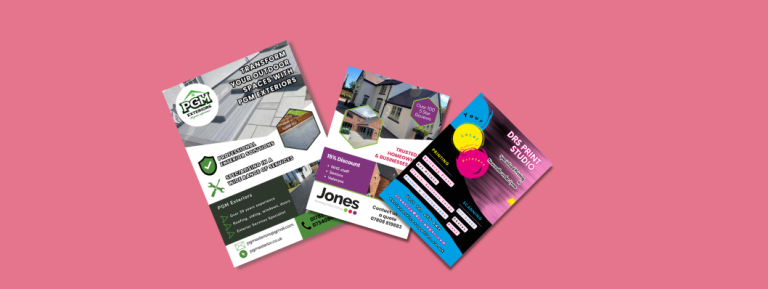
Quality printing for businesses in Stoke-on-Trent and Newcastle-under-Lyme.

3D printing is no longer an experimental tool, it is a practical solution.
