
Guides
Boost Your Art Sales with Custom Bookmark Printing in Newcastle-under-Lyme
Create bookmarks that not only look amazing but actually sell.


Explore our range of large-format printers from trusted brands like HP and Canon, perfect for CAD drawings, graphics, posters, scanning, and technical prints.
As an expert printer supplier near Stoke-on-Trent, we provide UK-wide delivery and professional advice to help you choose the right printer for your needs.
Selecting the right printing equipment is a major decision for any business offering large-format prints, CAD drawings or promotional graphics.

You’ll learn how to compare desktop A1 machines through to full large-format A0 plotters, and how integrated scanners/MFPs add value, so you pick the best system for your workflow.
Whether you’re producing precise architectural plans or vibrant colour displays, we’ll help you find a reliable, high-performance solution to match your workflow and budget.
1. Understand the Basics: Plotters vs Printers
When people talk about “plotters”, they often mean large-format printers built for wide media and precision.

The key difference:
For your business, this means understanding which size and format your customers need (plans vs posters vs signage) and matching that to the right device.
Choosing the right size is crucial. Let’s break this down:
Desktop / A1-format plotters
These typically handle media up to 24″ (A1) width. Ideal for small offices, design studios, and print shops doing moderate volumes.
For example:
These are lower cost, fit into standard office spaces, and cater to moderate print runs.
Mid/large size / A0-format plotters
When you need truly large prints (A0 size or bigger), for signage, architecture, engineering, etc.
For example:
Such machines handle larger media rolls, higher volumes, and higher precision. The cost and footprint go up accordingly.

In many businesses (architecture, engineering, print service providers), it’s not just about printing large drawings; you often need to scan, copy, and archive large documents (existing prints, drawings, plans).
That’s where Multifunction Plotter/Printer/Scanner (MFP) systems come in.
Here’s a quick matching strategy for your customers:


Create bookmarks that not only look amazing but actually sell.
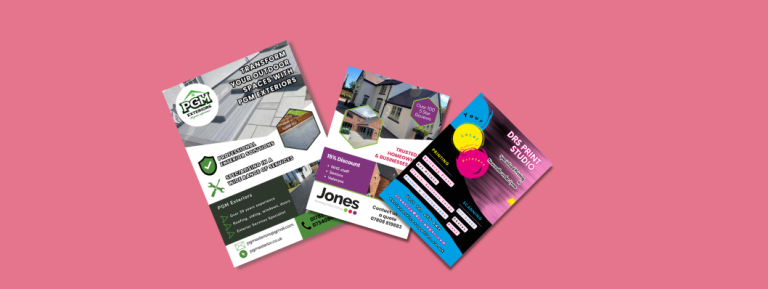
Quality printing for businesses in Stoke-on-Trent and Newcastle-under-Lyme.

3D printing is no longer an experimental tool, it is a practical solution.
